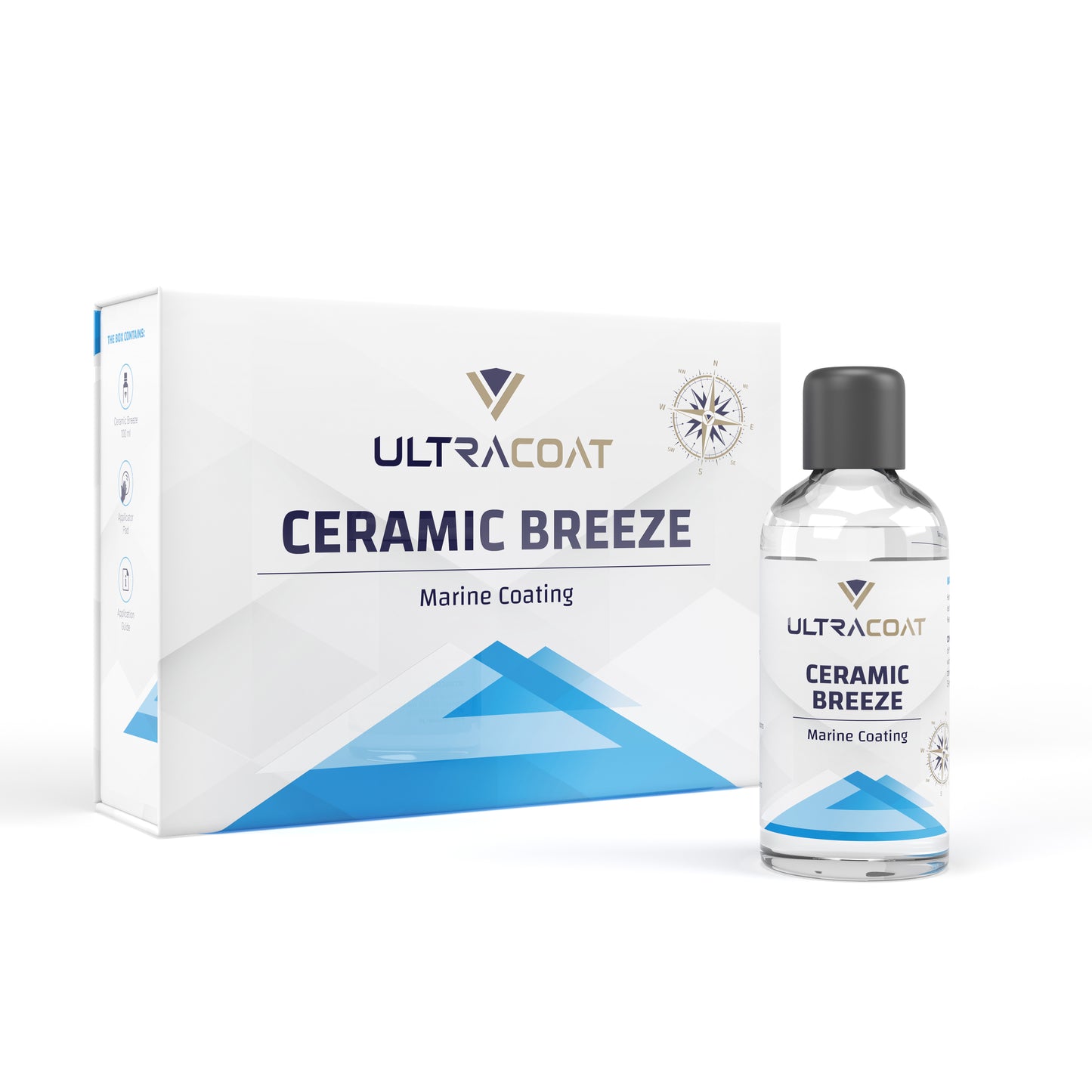
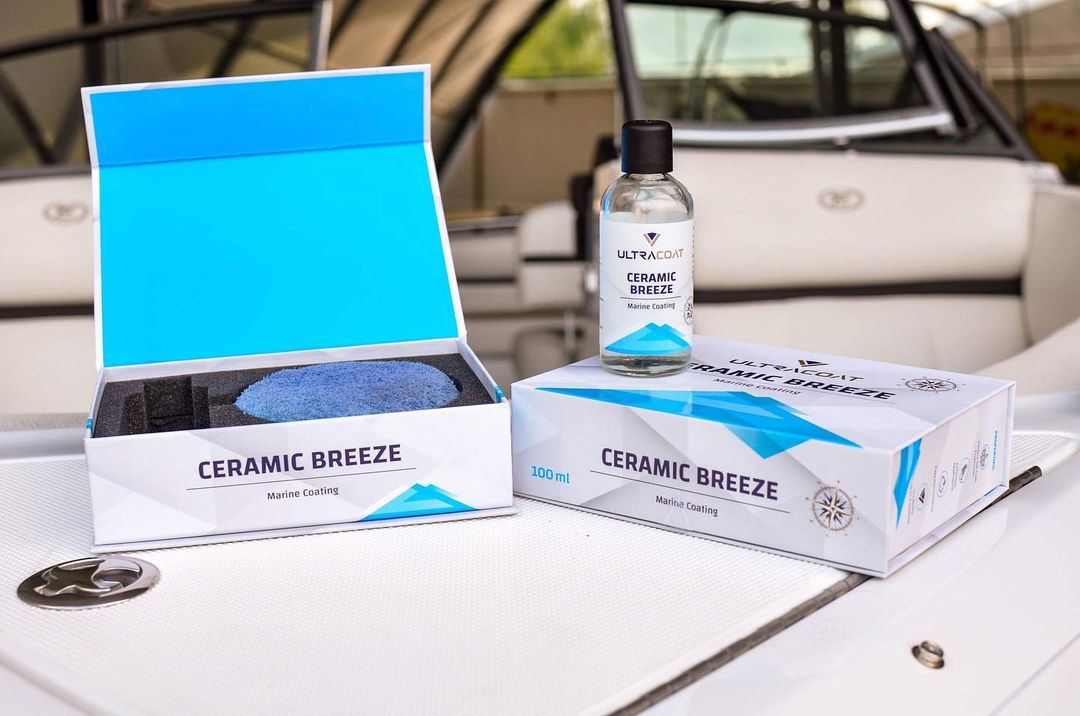
ULTRACOAT
Couldn't load pickup availability
Gelcoat is porous. That is the whole problem, and this is the fix. Two seasons of protection from two layers.
A boat hull is not a car. Gelcoat has a porous finish, which means it oxidises and takes on contamination far more readily than automotive clear coat. It is why a boat that looked immaculate in its first season comes out of winter storage looking chalky, and why diesel staining along the waterline becomes permanent if it is left.
Ceramic Breeze is built for that. Same coating technology as the ULTRACOAT car range, reformulated for gelcoat, marine surfaces and vessels that sit in the water for long periods.
Tested where it matters. In trials on rough Norwegian waters, two layers protected the hull across two full seasons.
What you get day to day: a barrier against algae, diesel and waterline staining, a hull that stays glossy rather than going chalky, real depth in the colour, and washing down that takes a fraction of the time because nothing wants to bond to the surface.
UV is where it really earns its place. It carries the strongest UV rating in the entire ULTRACOAT range, which matters more on water than anywhere else: a hull gets the sun directly and again reflected off the surface all day long.
It is worth applying to a brand new boat as much as an older one. Gelcoat starts porous. Protecting it from day one is easier than restoring it later.
- Made for gelcoat, not adapted from a car coating
- Two seasons from two layers, tested in Norwegian waters
- Stops algae, diesel and waterline staining bonding to the hull
- Prevents the chalky oxidation gelcoat is prone to
- Cuts wash-down time dramatically. 100 ml.
How Ceramic Breeze performs
UV protection ▰▰▰▰▰ (5)
The strongest UV rating in the range, which is exactly what a hull needs
Hydrophobicity ▰▰▰▰▰ (5)
Water is repelled the moment it lands
Gloss ▰▰▰▰▰ (5)
Outstanding gloss on gelcoat
Colour depth ▰▰▰▰▱ (4)
Brings real depth back to a faded hull
Ease of application ▰▰▰▰▱ (4)
Straightforward, even over a large hull
Slickness ▰▰▰▱▱ (3.5)
Lower than the car coatings, because gelcoat protection is the priority here
Technical support available.
Prepare. Strip old waxes, glazes and coatings. Correct and decontaminate the gelcoat, then degrease thoroughly. Proper cleaning is what determines how well it bonds.
Conditions. Never in direct sunlight or on a hot surface. Do not work above 30 °C. Work in good light.
Apply. Shake well. Thick layer, crosshatch method, roughly one square metre at a time.
Level. Wait about a minute, remove most of the product with a microfibre, then wipe the residue with a clean one.
Layers. Two layers for the tested two-season durability.
Safety. Wear a protective mask and gloves throughout application.
Cure. 24 hours minimum with no water or chemical contact.
Storage. Use within 6 months of opening. Keep cool and out of the light to prevent premature crystallisation.
Note. Use fresh microfibres and change them often.
Ceramic Breeze uses the same technology as the ULTRACOAT automotive range but is reformulated for marine surfaces and vessels in prolonged water contact.
This is a different customer with a different budget. Boat owners and yard operators are used to annual antifoul and maintenance costs that make a car detailing invoice look small. A coating that halves wash-down time and prevents a season of oxidation is an easy commercial argument, and there are far fewer detailers competing for the work.
The technical case is straightforward. Gelcoat is porous and oxidises readily, which is why marine finishes degrade faster than automotive ones. Sealing that porosity is the single highest-value intervention available on a hull, and it applies to new vessels as much as to restoration work.
Where the work is: marina contracts, boatyard partnerships, pre-season prep, new-boat handover through dealers, and topside work on yachts and motor cruisers. Winter storage months are also your quiet season in car detailing, which makes marine a genuine counter-seasonal revenue line.
- Two layers for two seasons, so quote the material accordingly
- Counter-seasonal work that fills the winter gap in car detailing
- Marina and boatyard contracts rather than one-off retail jobs
- Substantially less competition than automotive coating work
- 100 ml
Preparation. Remove all old waxes, glazes and coatings. Correct and decontaminate the gelcoat, then degrease.
Conditions. Never in direct sunlight. Do not work above 30 °C. Ensure correct lighting.
Application. Thick layer, crosshatch method, approximately 1 sqm sections.
Levelling. Wait approximately 1 minute, remove the majority with a microfibre, then wipe residue with a clean microfibre.
Layers. Two layers for the tested two-season durability.
Cure. 24 hours minimum with no water or chemical contact.
Note. Use new microfibres and change them frequently throughout the job.
Support. Technical support available from Ultracoat UK.
Share